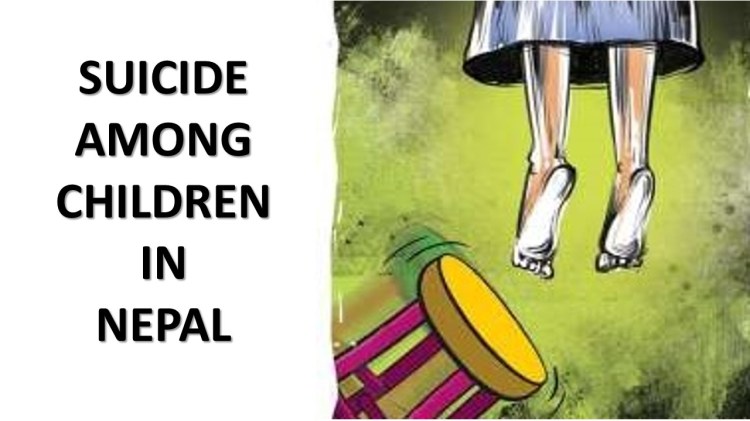
Childhood is considered as the most beautiful phase of life. With bundles of curiosity in the expanding tender mind, every little things around you appear amusing and fascinating during childhood. But as children step into the teen phase of their life, they start experiencing lots of changes (physical, intellectual, personality and social). Along with these changes come overpouring challenges in the form of confusion, fear, anger, impatience, love, attraction, betrayal, comparison, competition, stress, lack of confidence, family situation, domestic violence, financial limitation, ascending desires, pressure to succeed, failure, bullying , peer group, sexual harassment, academic performance etc.
In the developing countries like Nepal, issues related to the society, economic condition, education, culture and tradition plays significant role as a promoting factor for suicide among children.
Growing children, who have hardly figured out what their priority is, have very hard time dealing with those emotions and challenges. If not addressed and taken proper care of in time, these will lead children to fall victim of mental disorder. Which is the prime cause of suicide among children. The majority of children and adolescents who attempt suicide have a significant mental health disorder, usually depression. Research shows that 90% of people who have died of suicide suffered from some kind of mental illness. In USA second leading cause of death among youngster is suicide. Even in Nepal suicide is among leading cause of death among youngster.
According to the data collected from the Police Headquarter, Kathmandu ( 2172 documented cases of complete suicide in the age group between 4 to 21 years from Jan 2005 to Dec 2009) in Nepal the leading causes of suicide among youngster are domestic violence (35%), mental illness(24%), academic failure(15.8%), end of romantic relationship(8.7%). Suicide among female is alarmingly high than male. Various studies shows that the most of the youngsters are found committing suicide by hanging(58.8%), Poisoning(3.6%), drowning (2.9%), burning(1.1%), jumping from the height (0.5%) and others. Burning is more common in female than male. Every year remarkable number of students commit suicide due to academic failure (mostly in SLC, now SEE). In the developing countries like Nepal issues related to the society, economic condition, education, culture and tradition plays significant role as a promoting factor for suicide among children. Nowadays, indecorous use of social media have become one of the biggest threat. Many children have committed suicide due to online humiliation and harassment so far.
CHILDREN HAVING FOLLOWING CONDITIONS ARE PRONE TO SUICIDE
- Children with mental disorders.
- Children having family history of suicide.
- Children who are victim of sexual abuse, bullying, harassment and domestic violence or any other traumatic situation.
- Children under the pressure of high expectation of family.
- Children who lack emotional support and motivation.
- Parental dispute and inappropriate family environment.
HOW TO KNOW THAT YOUR CHILDREN ARE SUICIDAL (WARNING SIGNS)!
- Children often talk about committing suicide , ending life, life is unfair etc.
- Lack of enthusiasm.
- Exhibit severe sadness, speak less and isolate themselves (social withdrawal).
- Loose interest- studies (gradual degradation in academic performance), amusement (stop having fun and hanging out) .
- Increase in irritability, aggressive behavior and inappropriate eating habit.
- Lack of attention and concentration.
- Lack of determination and give task unfinished.
- Unable to handle situations.
- Sleep disturbance.
- Self-harming behavior.
- Detachment with the possessions.
In Nepal, people are mostly unaware as well as least concerned about the psychological needs at any age. So, its become challenging to address mental issues of kids. By taking care of mental health of children the rate of suicide can be decreased significantly. Parents, teachers and caretakers should be able to recognize the warning signs in time. And the problems should be dealt without being judgmental. Our education system also need reforms as it impose unnecessary stress on children. People should come out of the conservative mindset in the name of society, culture and tradition. Children should be provide wise environment for their wellbeing.
Sandip Gupta (Chairperson, Sketch Nepal)
 SKETCH NEPAL