THE FIRST FIVE YEARS

What if I was to tell you that the game of Peekaboo could change the world? Thanks to the scientists, we now know just how important the first five years are for our health and development, especially our brains. Our brains develop faster in our early years than any other time in our life. It can create up to 1 million neural connections every second, but we need your help. Our healthy development depends on these top five things:

The most special period for our development is the first five years of our life. What’s something really impactful you can do? Serve and return. And when? Early and often. Imagine the difference we could make if everyone did this.

All of these helps our brain and us to reach our full potential. So, what’s something you can do that can really makes difference? “Connect, talk and play with us.” Copycat games build imaginations and empathy. Naming games build vocabulary and attention. And games like Peekaboo, yep, Peekaboo, actually build memory and trust. Each time you talk to us, play with us, make us laugh, it not only builds and strengthens our relationships and mental health. It actually teaches us some of the most important life skills, from making friends, to taking a test, to getting a job, to one day maybe even starting a family of our own. I know it’s important for adults to use their devices sometimes, but kids are hardwired to seek out meaningful connections. Not receiving then causes confusion and stress.

What if a whole childhood was like that? How hard it would be for a child to feel calm, to feel safe, to learn to trust anyone, and the lifelong impact that would have. So, please try to remember the most special period for our development is the first five years of our life. What’s something really impactful you can do? Serve and return. And when? Early and often. Imagine the difference we could make if everyone did this.

Sweta Tiwari
Vice-chairperson
Sketch Nepal

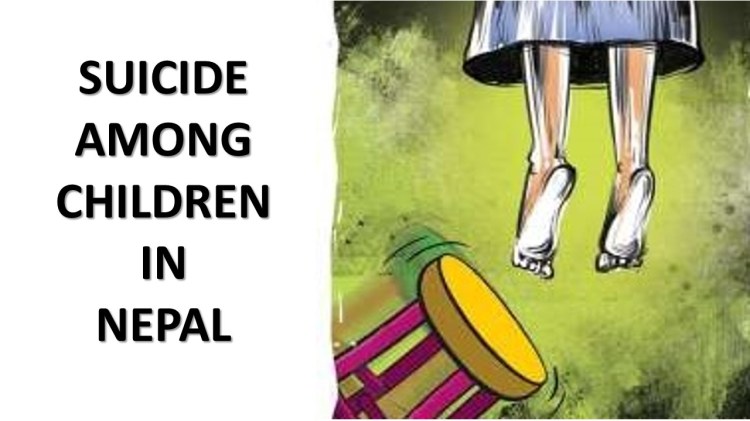
SUICIDE AMONG CHILDREN IN NEPAL

Childhood is considered as the most beautiful phase of life. With bundles of curiosity in the expanding tender mind, every little things around you appear amusing and fascinating during childhood. But as children step into the teen phase of their life, they start experiencing lots of changes (physical, intellectual, personality and social). Along with these changes come overpouring challenges in the form of confusion, fear, anger, impatience, love, attraction, betrayal, comparison, competition, stress, lack of confidence, family situation, domestic violence, financial limitation, ascending desires, pressure to succeed, failure, bullying , peer group, sexual harassment, academic performance etc.

In the developing countries like Nepal, issues related to the society, economic condition, education, culture and tradition plays significant role as a promoting factor for suicide among children.

Growing children, who have hardly figured out what their priority is, have very hard time dealing with those emotions and challenges. If not addressed and taken proper care of in time, these will lead children to fall victim of mental disorder. Which is the prime cause of suicide among children. The majority of children and adolescents who attempt suicide have a significant mental health disorder, usually depression. Research shows that 90% of people who have died of suicide suffered from some kind of mental illness. In USA second leading cause of death among youngster is suicide. Even in Nepal suicide is among leading cause of death among youngster.

According to the data collected from the Police Headquarter, Kathmandu ( 2172 documented cases of complete suicide in the age group between 4 to 21 years from Jan 2005 to Dec 2009) in Nepal the leading causes of suicide among youngster are domestic violence (35%), mental illness(24%), academic failure(15.8%), end of romantic relationship(8.7%). Suicide among female is alarmingly high than male. Various studies shows that the most of the youngsters are found committing suicide by hanging(58.8%), Poisoning(3.6%), drowning (2.9%), burning(1.1%), jumping from the height (0.5%) and others. Burning is more common in female than male. Every year remarkable number of students commit suicide due to academic failure (mostly in SLC, now SEE). In the developing countries like Nepal issues related to the society, economic condition, education, culture and tradition plays significant role as a promoting factor for suicide among children. Nowadays, indecorous use of social media have become one of the biggest threat. Many children have committed suicide due to online humiliation and harassment so far.

CHILDREN HAVING FOLLOWING CONDITIONS ARE PRONE TO SUICIDE

  • Children with mental disorders.
  • Children having family history of suicide.
  • Children who are victim of sexual abuse, bullying, harassment and domestic violence or any other traumatic situation.
  • Children under the pressure of high expectation of family.
  • Children who lack emotional support and motivation.
  • Parental dispute and inappropriate family environment.

HOW TO KNOW THAT YOUR CHILDREN ARE SUICIDAL (WARNING SIGNS)!

  • Children often talk about committing suicide , ending life, life is unfair etc.
  • Lack of enthusiasm.
  • Exhibit severe sadness, speak less and isolate themselves (social withdrawal).
  • Loose interest- studies (gradual degradation in academic performance), amusement (stop having fun and hanging out) .
  • Increase in irritability, aggressive behavior and inappropriate eating habit.
  • Lack of attention and concentration.
  • Lack of determination and give task unfinished.
  • Unable to handle situations.
  • Sleep disturbance.
  • Self-harming behavior.
  • Detachment with the possessions.

In Nepal, people are mostly unaware as well as least concerned about the psychological needs at any age. So, its become challenging to address mental issues of kids. By taking care of mental health of children the rate of suicide can be decreased significantly. Parents, teachers and caretakers should be able to recognize the warning signs in time. And the problems should be dealt without being judgmental. Our education system also need reforms as it impose unnecessary stress on children. People should come out of the conservative mindset in the name of society, culture and tradition. Children should be provide wise environment for their wellbeing.

Sandip Gupta (Chairperson, Sketch Nepal)

PREVENTING CHILD ABUSE: THE ROLE OF TEACHERS

Sweta Tiwari Secretary
Sketch Nepal

Parents want to be convinced that their kids are safe and they are capable enough to protect them from any heinous situation. But it’s almost impossible for them to keep an eye on their children all the time. Safety of a child is not just an individual concern. The responsibility of protecting children from maltreatment should be shared by each and every unit of the community when the children are away from their parents or safe environment. Well coordinated preventive intervention is necessary which not only include parents but also teachers and other responsible components of the community to keep children safe from sexual abuse. Everyone has to unite to fight against the ruinous reality of child sexual abuse.

Teachers are committed professionals whose duty is not only limited to educating kids but they are also responsible for ensuring and providing them safe and healthy environment.

Undoubtedly, parents have major influence on the safety of their children. But the role of teachers towards ensuring children safety is equally important. Children spend most of their time close to the teachers. Teachers are committed professionals whose duty is not only limited to educating kids but they are also responsible for ensuring and providing safe and healthy environment. Teachers have a moral and ethical obligation to help abused children by identifying problem, responding appropriately and reporting concerns.

What Teachers Can Do to Prevent Child Sexual Abuse

Children, most of the time, fall victim of sexual abuse at home or non-school environment. It has been recorded that 95% of child sexual abuse victims are abused by someone who they know and trust. Child sexual abuse offender may be one among family members, relatives or acquaintances. School can be one of the safe place. And teachers do have lots of potential and can play a key role in protecting kids from falling victim of child sexual abuse.

EDUCATE YOURSELF

Kids spent most of their productive time at school where they are involved in diverse mental and physical activities under the close guidance and watch of the teachers. Teachers are pretty much aware about the regular behavior and pattern of the kids. The children who are being abused may display some major behavioral changes at school. Consequences can clearly be noticed in their behavior and performance. If teachers are equipped with the proper information and knowledge about different aspects of child sexual abuse, they can easily identify and take appropriate and effective initiation to save the children from the hazardous situation of child sexual abuse.

WIN THEIR TRUST

Kids who are being abused by their relatives or someone they know and trust may feel unsafe at home. Teachers should create the environment where kids can feel safe and cared. Teachers have to win the trust of kids so that they can comfortably talk about anything that is ruining them from inside.

EDUCATE CHILDREN

The foremost thing that the teachers can do is to equip their children with the knowledge and skills to deal with the situation in the absence of caretaker. Teachers should teach their children about about touches. (Good touch and bad touch is commonly used concept to teach children what type of touch is okay and what type of touch is not okay in order to protect them from falling victim of child sexual abuse.)

RESPOND AND REPORT

Teachers have to be adequately prepared about the links, concerned legal department and procedure required to respond and report to any form of suspected abuse. They should respond to the emergency, report to the authorities and contact parents or carers promptly as per the need of the situation. They also have to keep the clear and comprehensive note of the situation or incident.

Protecting children and promoting good mental health amongst children is one of the most important role of the teachers. Not only teachers, we all have to stand together against any kind of child abuse- physical, psychological or sexual. Children are vulnerable in all sorts of ways simply because they are children. All adults who work closely by the children have responsibility to protect them from any kind of maltreatment.

Kashinath Joshi: Sacrificed All The Comfort to Serve His Nation

Kashinath Joshi

Nothing is more inspiring and greater than someone who step out of their comfort to make life comfortable for others. Serving as a Yoga Teacher at AIU University in Australia for five years and living a joyful life with his family, Kashinath Joshi never lost his connection with his motherland and his people. This deep rooted connection, compassion and the love for the nation could not hold him back in Australia for long time. Despite of all the material comfort, opportunities and prosperity in Australia, he chose to return back to his homeland to serve his people.

Kashinath Joshi was Born in an aristocratic family in Joginiya village of Saptari district on 26th April, 1940. He was the eldest son of father Late Danbahadur Joshi and mother Late Ganesh Kumari Joshi . Unlike other children, Joshi was spiritually inclined,  generous, humble and ethical by nature from very tender age. He was born in the era when even an access to the primary education was far-flung for many. He graduated in Economics from Bihar University, India in 1962. He served as a Research Officer for Center for Economic Development and Administration till 1968.

The best way to find yourself Is to lose yourself in the service of others.

Mahatma Gandhi

Kashinath Joshi always knew that education is an essential human virtue and unless people are educated , it is almost impossible to overcome the problems of society. Growing up in his village Joshi had an opportunity to closely experience the miseries of the poverty-stricken people due to the lack of education. The hardship of the people left deep impression in him. This inner spark was so strong that all the material prosperities, facilities and opportunities appeared insignificant and tasteless before it. Hence, he returned back to his birth place to serve his people. His selfless effort opened the door of quality education for many underprivileged children.

Though being in his 8Os, the zeal of Kashinath Joshi towards the empowerment of indigent doesn’t seem to fade any sooner. He still has unlimited enthusiasm for the education and happiness of humanity. To ensure the reach of quality education for many underprivileged children he initiated and made major contribution in establishing four schools in his hometown: Durga National Primary School, Bantore Primary School, Gorpar Primary School and Baba Bankhandi Gurukul. Baba Bankhandi Gurkul is one of the most important ambitious project of Kashinath Joshi.

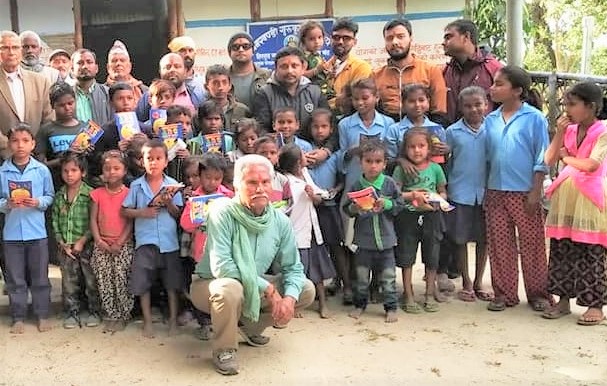
Kashinath Joshi at Baba Bankhandi Gurukul School in an Educational Material Distribution Program

Bankhandi Gurukul School is a Sanskrit school established in 2072BS in Trihut Gupalika, Saptari District. The school is situated in the premises of historical and cultural heritage site of Baba Bankhandi Temple (Bheriya Math). The school was established by Mr. Kashinath Joshi with an objective to form an institution to fill the gap of  moral, ethical, spiritual values in modern education along with preserving and protecting the divine culture and tradition. In the Gurukul around 30 underprivileged children, irrespective to their caste and race, from the backward community learn in close proximity of a teacher, where greater emphasis is laid on students mental, cognitive, spiritual and physical wellness. Education, accommodation , food, clothes, education materials etc. are free in the gurukul. The gurukul is run on the donations offered by individuals, national and international organizations. The Gurukul is the dream project of Joshi. It was established with the vision to achieve the university status and to serve thousands along with preserving our ancient culture, tradition and to produce moral citizens.

In order to improve the life standard of people of backward community in his village, Joshi established a non-governmental organization called Sarbodaya Gramin Bikash Sangh (Currently known as Sarbodaya Nepal) in 1993. The organization has run more than fifty coaching sessions so far to educate the adults and the old aged people who never got chance to attend school. And to minimize the burden of unemployment the organization has run various skill development training workshops in the field of agriculture, handicraft etc.

Several time during natural calamities, Kashinath Joshi revived the ray of hope for many affected being . Joshi’s efforts in resettling the flood victims is praiseworthy. He incorporated with various individuals and organizations to collect support for the wellbeing of the victims. From reconstructing and constructing houses to feeding hundreds of them during calamity and organizing free health camps to minimize the probable health hazards is the reflection of his humanitarian instinct.

Joshi Receiving Social Welfare Award

Awarded by many honorable awards, Kashinath Joshi is living his life like a saint away from his family. He has decided to dedicate every second of his life for the wellbeing of others. His life is an ideal example of Simple living, High thinking along with Higher order of service to the humanity. Kashinath Joshi’s effort to improve the life of many is laudable. Even at the age of 80, his dream for better society doesn’t seem to let him retire any sooner. We pay him homage for his selfless service.

PREVENTING CHILD ABUSE: THE ROLE OF PARENTS

Sweta Tiwari
Secretary
SKETCH NEPAL

Child sexual abuse is the most shameful social evil that ever existed. Children who fall victim of abuse may have to live with the burden of harsh consequences throughout the life. The ratio of children getting abused is frightening. Several studies have shown that 1 in 5 children fall victim of child sexual abuse. Which is very unfortunate. Facts reveal that 95% of children fall victim of abuse by their own family members, relatives or the people whom they know and trust. It has become the most important and sensitive challenge for everyone to protect their children from being abused. And the parents can play the prominent role in preventing their kids from getting abused. A parent-child relationship is one that nurtures the overall development of the kids. It’s a unique bond that every child and parent shares where children grow in a healthy and secure attachment with their parents. We now that parents and guardians have the biggest influence on a child’s upbringing when it comes to educating them about sensitive issues like healthy sexual development and ways to reducing the risk of sexual abuse.

Protecting children from falling victim of abuse has become crucial. And the parents can play the most prominent role in protecting their kids from abuse.

It is a fundamental right and responsibility of every parents to raise their children in the best possible way. Parents and guardians need to understand that it’s their responsibility to train their children how to protect themselves from the predators. It is their duty to impart this critical knowledge and skill from the very beginning. Parents support for the prevention of child abuse is crucial. Here are few guidelines that parents need to take into consideration.

EDUCATE YOURSELF ABOUT VARIOUS ASPECTS OF CHILD ABUSE

Before teaching your kids you have to be well updated about child abuse. As it is very sensitive issue you should have sound knowledge about various aspects of child abuse (like preventive measures, signs and symptoms of abuse, dealing with victim and predator etc.).

TEACH YOUR KIDS ABOUT TOUCHES

The foremost thing that parents can do is to equip their children with the knowledge and skills to deal with the situation in their absence. Parents should teach their children about about touches. Good touch and bad touch is commonly used concept to teach children what type of touch is okay and what type of touch is not okay in order to protect them from falling victim of child sexual abuse. The knowledge of touch is best way to recognize and respond to the situation.

KNOW THE PEOPLE WITH WHOM YOUR KIDS ARE SPENDING TIME

Kids may come across various situation when they are alone with friends, teachers, coaches or sitters. Ask your kids with love, care and patience in a friendly way that what they did, if it was fun or not, how they feel being with them etc. The conversation should not be paranoid.

TEACH YOUR KIDS TO RECOGNIZE THE INTENTIONS OF PEDOPHILE

Pedophile may use various tactics to approach kids. Children should be able to identify the signs of such approach and act accordingly. Parents should teach their children how to act smartly in such situations.

Parenting is the deepest responsibility. It’s not just about being called ‘Mommy’ and ‘Daddy’. Your negligence may push your kids into the deep bog from where the escape is very painful and difficult. It’s your responsibility to protect your children from being trapped in the clutches of the abuser. It cannot be neglected and ignored.

STOP COMPARING YOUR KIDS

Sourav Dahal
Vice-Chairperson
SKETCH NEPAL

Every parents want to see their kid performing well. In order to excel the performance of the kids parent compare them to the counterparts who is already and comparatively performing well. Parents are still living with the dogma that the comparing is the right way to encourage the kids to enhance the quality of output of their efforts. But it’s counterproductive. Comparing your kid to other kids will affect the upbringing and mental health of your kids adversely. It will even disturb your relationship with your kids.

Whenever you compare your kids to other kids, you are not only imposing unnecessary stress but also hurting their self-esteem. Weaker self-esteem will decrease their confidence level and will-power. Your kids will develop inferiority complex and their performance graph may decline to the worse. The probability of developing wrong habits also increases. The memory of being compared stays long in your kid’s consciousness and they live with the belief that they were not good enough for their parents. And this belief will affect the relationship between parents and children unfavorably. After being constantly compared for a long time , unfortunately, they will accept the thought of being not good enough. And their own pace will also gets disturbed. The comparison tactic for improving the performance of your kids has proved to be counterproductive most of the time. All kids are not same.

If you are a parent and reading this article then let yourself jump into a flash back tour. As a kid, a teen ager and an adult you might have come across lots of people of your age at that time. You grew up together. Now try to figure out where and what are they today. Is their physical, mental, personal, professional and social status is same as yours? The answer will be a big NO.

Trying to prove to the other parents that your children are better than theirs’s is hilarious and doesn’t make any sense at all. PARENTING IS NOT A COMPETITION. Its all about nurturing your child with love, care and proper guidance. Parents should encourage their children to believe in themselves , explore their potential and discover their abilities. Kids should be taught to enjoy and feel proud of their efforts. They should be raised in the away that the spark of self-motivation always remain fresh within their consciousness . Let them grow up independently without being compared. Every kids are different and special.

PROBLEMATIC SEXUAL BEHAVIORS IN CHILDREN

We often see some children using sexual slang words excessively or are involved in sexual activities like repeatedly exposing their private body parts, inserting objects in sexual organs etc., which we find quite unusual, inappropriate, rare and regardless of their age, can be the common traits of problematic sexual behaviors. If not addressed seriously it may have harsh consequences . For example few cases has been reported in which children in their early teen have been found sexually abusing or even raping the pre-school kids.

SBC(Sexual Behavior Change) is quite normal and gradual which may vary from children to children. Sexual behaviors become problematic when it is not normal and appropriate for their age group. It even disturbs their regular routine activities by unnecessary and excessive interference.

As children grow physically, socially, emotionally; similarly, they grow sexually. Sexual change is a part of physical change whereas sexual behavior change is associated with psychological change. SBC(Sexual Behavior Change) is quite normal and gradual which may vary from children to children. In some, the change is slower and in some it may be faster based on their background, experiences, culture, socio-economic condition of their family etc. To identify and address problematic sexual behavior of kids we have to understand the development of normal sexual behavior change in children of various age group.

NORMAL SEXUAL BEHAVIOR DEVELOPMENT

The sexual behavior development is very common and normal occurrence during childhood . Generally, it is prominent between 3 years to 14 years of age.

Children of pre-primary school level (3 to 5 years) develops curiosity about their own body parts and adult body parts as well. They try to explore it by touching or by asking various questions related to it.

Children of primary school level (5 to 11 years) are more conscious about the social rules and regulations about sexual behavior but still have interest towards sexual body parts. Children of this age don’t like or hesitate to appear naked and have developed the feeling of shyness; they are very sensitive. Learning and using sexual slang words for the body parts, cracking dirty jokes for entertainment among their own age group is also common and normal up-to some extent. They also develop interest in adult sexual behavior. The initial signs of puberty is also seen in later years.

Children of middle school (11 to 14 years) are aware about their sexual feelings which go along with puberty. They start developing interest in romantic relationships; it is very common to have crushes, infatuations at this stage. Children of this age desires to experience the touch of opposite sex. Children may start masturbating or try experimental sexual activities.

Before understanding about the problematic sexual behaviors of children; parents or caretakers have to be aware about the normal sexual behavior development in them. It will help them to recognize problematic sexual behavior in children properly.

COMMON PROBLEMATIC SEXUAL BEHAVIOR IN CHILDREN

Sexual behaviors become problematic when it is not normal and appropriate for their age group. It even disturbs their regular routine activities by unnecessary and excessive interference. In most of the cases children with problematic sexual behavior harm themselves and even to other children. A number of time consequences are fatal. Common examples problematic sexual behavior are:

  • Excessive use of vulgar and offensive sexual slang words and even jokes .
  • Obsession of sexual body parts and sexual activities.
  • Often showing sexual body parts publicly to the children of their own age group; even to older and younger children.
  • Children trying hard to watch adults undressing in bathroom or dressing rooms without being noticed.
  • Inserting objects in sexual body parts causing harm to the organs.
  • Trying or copying sexual intercourse with toys, pets and the younger children of pre-school. It also involves oral-genital contacts.
  • Forcing other children in inappropriate sexual activities.
  • Making all possible attempts to have access to the pornographic contents.
  • Online sexual abuse of others by hiding identity and age.
  • Associating with the children who encourage inappropriate sexual activities.

There are various reasons behind the occurrence of PSB(Problematic Sexual Behavior) in children. It is mostly influenced by what they have watched and heard from their experiences from parents, sibling, relatives, acquaintances, television, internet, magazine etc. Family environment, friend circles etc plays vital role in creating PSB. Few children who have already become victim of child sexual abuse also exhibit this kind of behaviors.

Unfortunately, parents and caretakers barely accept the fact that their children are having problematic sexual behavior problem. Instead, they take it lightly ,ignore it or have instant harsh and destructive reaction. If the problem is not addressed constructively PSB will have worse and long lasting consequences. Sometime PSB is so intense that all efforts to control it fails and hence it requires professional helps. PSB in children is not something to hide or ignore. It, in fact, need proper attention, appropriate efforts and methods by parents and caretaker to help their children to get rid of it.

Sandip Gupta(Chairperson, SKETCH NEPAL)
A TIME TO GROW: GARDENING DURING LOCK-DOWN

This period of lock-down due to covid-19 global pandemic has become very chaotic situation for the parents. Parents are worried about the future of their kids. Most of the children are unable to attend their regular school. They are stuck in their home and unfortunately lots of them don’t have proper access to the online education. But still we can’t ignore the fact that every problem has an underlying opportunity. We simply have to figure it out. Parents can utilize this period by teaching the lessons to their children that they barely learn at the school. Amazingly, children can be taught valuable lessons of life by merely involving them in simple household activities and helping them to explore it through various perspectives. And involving kids in the gardening is one of the foremost and effective activity. Gardening can offer children an opportunity to learn patience, sense of responsibility, compassion, environmental awareness and it also nourishes their mental and physical health.

Gardening with kids is more than an activity, it’s a family affair. Dig in the soil together to add physical activity and subtract stress.

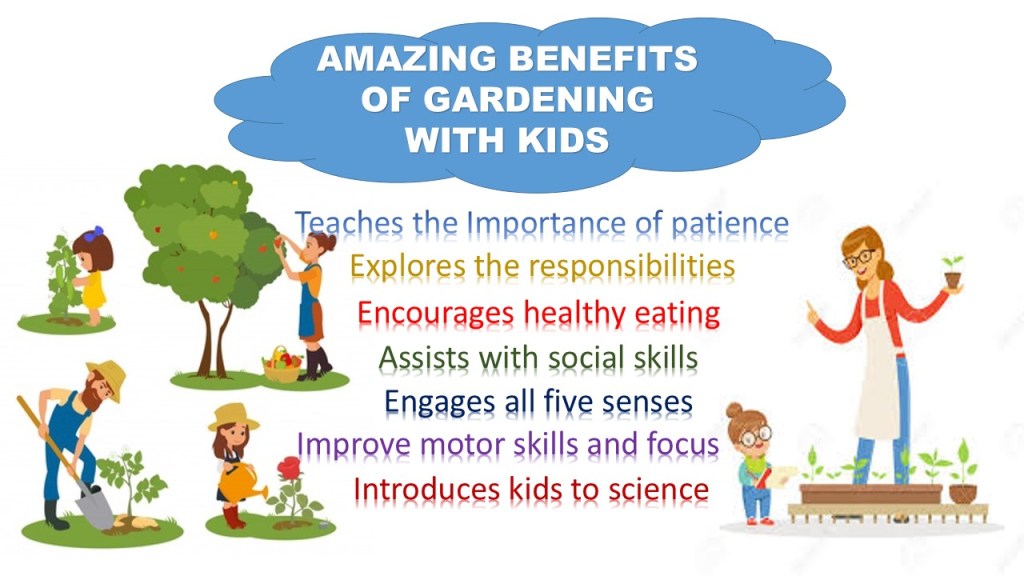
AMAZING BENEFITS OF GARDENING WITH KIDS

TEACHES THE IMPORTANCE OF PATIENCE: When you get them in the garden, you have the opportunity to teach them that the good things take time, if the child provides the right care and patience, the movement, the vegetable, the flowers or the herbs sprout will be one they never forget and will get sense of accomplishment when their plant grows.

EXPLORES RESPONSIBILITY: Nothing teaches responsibility quite like creating something yourself. When you garden with children, they are learning patience as well as responsibility. Planting anything requires daily maintenance. Whether they are checking the progress of seeds, picking out weeds or simply watering their plants, kids will have to take responsibility with their own plants.

ENCOURAGES HEALTHY EATING: Showing children how their food is grown and having them help throughout the process will make it more exciting when it’s ready to eat. Gardening with kids help them to explore their relationship with food. A child may find salad more exciting and appetizing knowing they helped grow the vegetable in it.

ASSISTS WITH SOCIAL SKILLS: As a toddler children are just beginning to social skills and finding where they fit within the family, among their siblings, and how to communicate properly. Gardening provides unique playground. It is very nurturing experience for both parent and child as well as plant.

ENGAGES ALL FIVE SENSES: The five senses: sight, hearing, smell, taste and touch; Gardening involves each and every of these senses. From the early year when kids familiarizes themselves with certain plants, flowers and food to digging their fingers into the soil or taking the time to smell the flower, a day spent in the garden touches each sense in a very positive and unique way.

IMPROVE MOTOR SKILLS AND FOCUS: Improve and support the motor development skills by taking younger kids into the garden. allowing them to put the plant in the place they dig, plant the seeds will help their motor skills. These motor skills will come in handy later when they learn to write, type and cut. Work like carrying water can and watering the flowers or carefully picking out weeds, these type of works increases focus.

INTRODUCES KIDS TO SCIENCE: Help your children to learn about plants and introduce them to the diverse world of science. You can begin with simple very simple concepts like how watering the plant help them to grow. Allow your children to asks questions or research on their own with the reference of kids book. Working in garden with kids is like homemade science lesson.

If you are probably grasping for anything, you can get your hands on to keep your little ones entertained during this corona virus lock down. Enter gardening with kids bond with your children and foster a colorful love of nature and food together.

Sweta Tiwari
Sweta is the Secretary of SKETCH NEPAL and runs various programs against child sexual abuse and psychological development of children.

IMPACT OF THE PROBLEMATIC SMART PHONE USE ON THE CHILDREN DURING LOCKDOWN

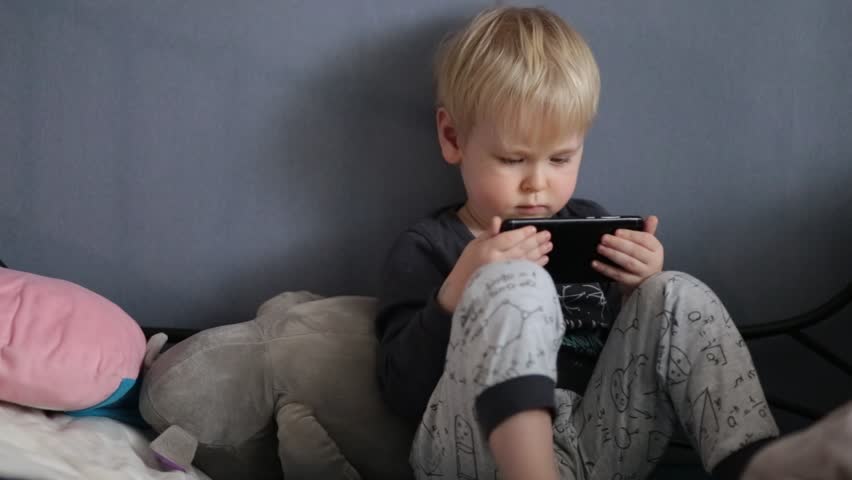
Nowadays, most of the children have easy access to smart phones or they have their own personal screen devices. The average time spent by the children (7 years- 16 years ) using mobile phones or personal computers is more than 2 hours a day, in general. Due to the lock down the duration of use of mobile phone and even personal computer have increased by 3 to 4 times a day as internet is the only medium to continue study and connect with friends. The overuse of screen devices like mobile phone, personal computers etc can affect the mental, physical and social health of the children adversely.

Due to the COVID-19 pandemic more than 1.5 billion children are affected around the globe because of closure of schools. And lots of children are using mobile phones and personal computers more than 8 hours a day unguided at home in lock-down. Mobile phones are such a private technology that it has become a big challenge for parents to monitor what children are accessing online. And most of the children even sleep with mobile phone beside them. This overuse of mobile phone during lock-down can affect almost all the aspects of your children health.

Lots of children are using mobile phones and personal computers around 6 to 8 hours a day at home in lock-down. Mobile phones are such a private technology that it has become a big challenge for parents to monitor what children are accessing online.This overuse of mobile phone during lock-down can affect almost all the aspects of your children health.

MENTAL HEALTH

Excessive use of cell phones among children may results in cell phone addiction which will lead to stressful behavior change. Problematic smart phone use can affect the mental health of the children in various ways:

  • The children will experience anxiety and depression when they are away from their cell phone.
  • It increases impatience, disturbs daily life, affect productive time which leads to poor academic performance.
  • The most of the children use cell phones till late night on bed, which leads to insomnia. And insomnia ultimately results in depression and anxiety.

PHYSICAL HEALTH

Problematic smart phone use reduces the time of physical activity, exposes to harmful radiations, decreases the sleep time which has very bad consequences on children health.

  1. Children have high obesity risk and as most of the time is spent indoor before screen, it prevents children playing outdoor sports. And the decline in outdoor activity has adverse affect on fitness.
  2. Children become lazy and develops the tendency of postponing the priorities due to smartphone addiction.
  3. Over exposure to the screen also increases the risk of eye related problems.
  4. Children has more chances of suffering from the disorders caused due to the excessive exposure to the radiation.

SOCIAL HEALTH

When kids get access to violent, sexual and immoral contents in internet; it may influence their social behavior in a destructive way. Unfortunately, its very difficult to control what they are accessing online as smart phones are very private devices that everyone keeps it very close to themselves as if it is a part of their body.

  1. Problematic smart phone use can lead them vulnerable to be bullied.
  2. They may get influenced and commit cyber-crime like online harassment to others or may be getting harassed by others.
  3. They may get involved in Fraping and Cyber Bullying..
  4. More chances of occurrence of privacy related problems.

As most of the kids and parents are stuck in their homes for uncertain period of time; this period can be utilized to nurture their kids rather than encouraging problematic smartphone use carelessly.Excessive use of smartphones may lead to screen addiction which is as dangerous as drug addiction. This lock down has even a positive side. Parents have an opportunity to know their kids better, improve their shortcoming, enhance moral values, teach them household activities, explore their psychological state and strengthen bonding. So that children stay engaged along with enhancement in their personality. Hence, its a responsibility of parents to use this lock down period for nurturing their kids rather than neglecting their presence by allowing them to stuck before the screens.

Sandip Gupta (Chairperson, SKETCH NEPAL)
PARENTING KIDS DURING LOCK-DOWN

Jeena Shrestha

Corona virus disease (COVID-19) is an infectious disease caused by a newly discovered strain from corona virus family  which was first identified in Wuhan, China in December 2019 and rapidly spread all over the world as a pandemic.

The most common symptoms are: fever, cough, and shortness of breath or breathing difficulties. In more severe cases infection can cause pneumonia, severe acute respiratory syndrome and even death. The period within which the symptoms would appear is 2-14 days.

This lock-down period can be boring, fearful and scary as well for the children . And this fear and stigma will consequently make the situation even worse than before.Because of the stress level about pandemic of COVID-19, various type of mental effects can be seen in individual like restlessness, feeling of isolation, sad and depress, panic, anxious, loss of appetite, sleep disturbances, decrease in the level of working activity, anger etc. During this home quarantine period, it depends on how the parents shows reactions to the situation towards their children.

As the novel corona virus outbreak continues to take hold all over the world. Millions of people are locked down at home to stay safe and to break the chain of spread. But for children, this situation can be fearful, scary and boring too. We all know that, we are feeling anxious, panic about corona virus. But fear and stigma makes the condition worse than before. During these home quarantine periods, it depends on how the parents shows reactions to the problem depends upon their family background level, community and education level etc. and there is also individual difference how we cope to the situation and problem. Because of the stress level about pandemic of COVID-19, various type of mental effects can be seen in individual like restlessness, feeling of isolation, sad and depress, panic, anxious, loss of appetite, sleep disturbances, decrease in the level of working activity, anger etc.

In case of children various mental effects can be seen like thumb sucking, bed wetting, insecure attachment, crying and staring etc. Such type of symptoms depends upon the developmental task and age of children.

HERE ARE SOME TIPS TO KEEP THE CHILDREN MENTALLY AND PHYSICALLY HEALTHY DURING HOME QUARANTINE PERIOD

  • Engage them in various activities by involving and support them to learn different developmental skill like exercise, meditation, yoga, teaching household activity like cooking, washing, cleaning etc. according to their capacity and age.
  • Limit internet surfing and social media by avoiding hanging on the phone for long time and during pandemic situation help the children to limit and maintain social distance but not mental distance.
  • Engage them in such activity which develops their intellectual and cognitive level through games like playing chess, drawing, reading books and focus on creative activity depending on their developmental task.
  • Maintain a daily routine because nowadays due to outbreak of corona virus schools are closed. So that parents should maintain children’s usual meal and sleep as well as involve them in creating a new daily plan and interact them that how they want to spend their day. Make offline activities like fun games, dance, and play with children. Help them to talk with friends, relatives, teachers in video chat, Skype, phone etc. to make them refresh and update.
  • Appreciate and reinforce to the children in their work which reflects positive attitude and hope which motivates them to work further in coming days.
  • Keep the children with family members especially with grandparents by telling and listening story which helps them to get refresh and makes them happy. It also helps the children to be more socialized.
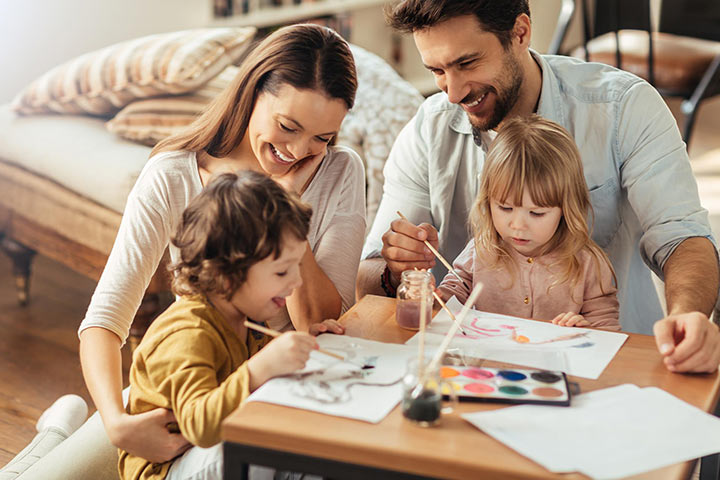
  • In these lock-down periods, make a plan and spend most of the quality time with children by involving in different creative activity.
  • Understand their feelings, emotion and make them feel that they are not alone. Create such environment that they can easily share their problems, feelings without any hesitation and fear. Make calm and sound home environment between these quarantine periods.
  • Maintain children’s physical and mental health by focusing on healthy and nutritious balance diet for proper function and development
  • Do talk about the corona virus according to the children education and age level and interact them positively by emphasizing the importance of effective measures including hand washing with soap and water, sanitizer, use of mask, gloves etc.
  • Parents should observe their own technology use. When parents are spending most of their time into news or social media feeds and its makes them more stressful than before, children can notice. So that parents should separate time and schedule for their own mental health too.
  • Parents can communicate with teachers about what educational online and offline activities children can do
  • Seek professional support and help if they have any problem which they are unable to ventilate their feelings, emotions. If needed visit to the counselor.
Jeena Shrestha
Psycho-social Counselor
Bachelor in Nursing
Master in Psychology
You can reach her on her hotline number for free counselling on
+977 9818913600 or mail her at jina2073@gmail.com